
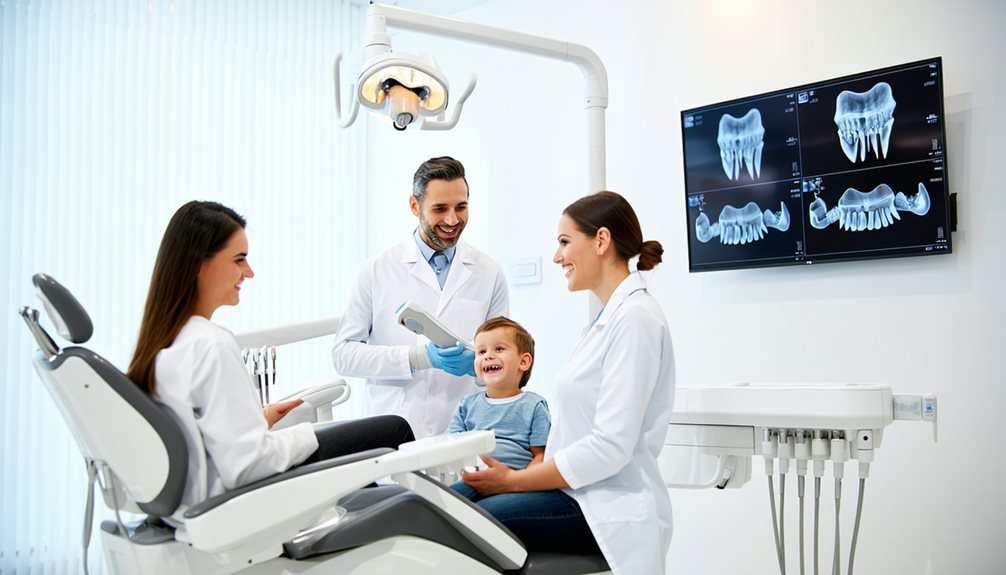
Top family dentists are embracing the latest technologies to transform patient care, delivering precision and comfort through innovative solutions. Digital imaging and AI-powered diagnostics provide clearer insights and early detection, enhancing treatment outcomes. Laser dentistry offers pain-free procedures, while 3D printing customizes implants and orthodontics, reducing manufacturing time and increasing accuracy. Teledentistry connects patients remotely, broadening access to care, and virtual reality minimizes anxiety, creating a calming dental experience. These advancements not only improve the quality of care but also align with modern expectations, positioning these dentists as leaders in the evolving landscape of dental innovation. Discover more developments shaping this field.
Digital X-Rays and Imaging
In recent years, the field of family dentistry has experienced a notable transformation with the adoption of digital X-rays and imaging technology. This innovative approach is redefining dental diagnostics, offering a range of digital imaging benefits that enhance both patient experience and clinical outcomes.
Digital X-rays provide a clearer, more precise image of the oral cavity, allowing dentists to detect issues that may be overlooked with traditional film-based X-rays. This precision leads to more accurate diagnoses and tailored treatment plans, ultimately improving patient care.
Moreover, x-ray safety has markedly improved with digital imaging. Digital X-rays require considerably less radiation exposure compared to their traditional counterparts, addressing long-standing concerns about patient safety while maintaining diagnostic efficacy. This reduction in radiation is particularly beneficial in family dentistry, where children and frequent visitors require regular imaging.
Furthermore, digital imaging technology streamlines dental processes, facilitating faster image sharing and storage. This efficiency not only speeds up the diagnostic process but also enhances communication between dental professionals and patients.
Digital images can be easily enhanced and manipulated to demonstrate issues and proposed treatments, fostering better patient understanding and engagement, thereby advancing the practice of modern family dentistry.
Laser Dentistry Advancements
Laser dentistry represents a significant leap forward in oral care, offering pain-free treatment options that enhance patient comfort and experience.
Pain-Free Treatment Options
Many dental patients dread the thought of drills and needles, but advancements in laser dentistry are transforming this experience into a more comfortable one.
The integration of laser technology in dental practices offers significant strides in pain management and anxiety reduction. Laser dentistry minimizes the need for traditional drills, reducing the discomfort that often accompanies dental procedures. This technology not only alleviates physical pain but also diminishes the mental stress associated with dental visits, making it a preferred option for those who experience dental anxiety.
Laser treatments are particularly beneficial in the following ways:
-
Minimized Pain: Lasers can target specific areas with precision, reducing the trauma to surrounding tissues and thereby lessening pain.
-
Faster Recovery: Patients typically experience quicker healing times and less postoperative discomfort, as lasers promote blood clotting and minimize bleeding.
-
Reduced Anxiety: The absence of loud, jarring sounds from drills helps to create a serene environment, easing patient anxiety.
Enhanced Precision Techniques
Advancements in laser dentistry have revolutionized precision techniques, offering unparalleled accuracy in dental procedures. The integration of laser technology into dental practices has transformed routine treatments, where precision tools enable dentists to target specific areas with remarkable accuracy.
These tools, employing concentrated light beams, allow for minimally invasive procedures, reducing the need for traditional drills and contributing to a more comfortable patient experience.
The capability of lasers to differentiate between healthy and diseased tissue is a breakthrough in enhanced diagnostics. This specificity guarantees that only the affected areas are treated, preserving healthy structures and optimizing treatment outcomes.
Additionally, lasers can effectively address issues such as tooth decay, gum disease, and cosmetic procedures with precise execution.
Laser dentistry also reduces the risk of infection by sterilizing the area of contact, offering a level of precision that manual tools cannot match. The innovative use of lasers promotes an environment where patients can trust that their dental care is both safe and cutting-edge.
As family dentists embrace these modern technologies, patients benefit from improved precision, reduced discomfort, and a more efficient path to maintaining oral health, aligning with the evolving expectations for dental care.
Faster Healing Times
The advent of laser technology in dentistry has not only enhanced precision but also remarkably accelerated healing times for patients. Traditional dental procedures often result in prolonged recovery periods due to the invasiveness of tools like drills and scalpels.
Laser dentistry, however, utilizes focused light energy to perform intricate tasks with minimal tissue damage, thereby promoting faster healing.
Laser technology offers a myriad of benefits that contribute to accelerated recovery:
-
Reduced Bleeding and Swelling: The coagulating effect of lasers minimizes blood loss and swelling, ensuring a more comfortable post-treatment experience.
-
Decreased Risk of Infection: Lasers sterilize the area being treated, considerably lowering infection risks and contributing to smoother recovery.
-
Minimized Need for Sutures: The precision of laser incisions often eliminates the need for stitches, further reducing post-treatment care requirements.
Patients experience not only reduced discomfort but also shorter downtime, allowing them to resume daily activities with confidence.
As dentists incorporate these advancements into their practice, they are tasked with staying informed about the latest technologies to provide ideal care.
Laser dentistry represents a considerable leap forward in dental innovation, aligning seamlessly with modern patients’ expectations for efficiency and efficacy in dental treatments.
Teledentistry for Remote Care
In today’s digital age, the landscape of dental care is being transformed by the integration of teledentistry, which offers remote consultations and treatment planning through virtual platforms. This innovative approach enables patients to connect with dental professionals via video calls, facilitating timely access to care without the need for in-person visits.
Remote consultations effectively bridge the gap for those residing in rural or underserved areas, guaranteeing that expert dental advice is accessible to everyone, regardless of location.
Teledentistry’s virtual visits offer a pragmatic solution for initial assessments, follow-up appointments, and emergency consultations. Patients can discuss their symptoms and treatment options with their dentist, who can then provide personalized guidance and recommendations.
This method not only saves time and travel expenses but also enhances patient convenience by allowing consultations from the comfort of their own homes.
Furthermore, the integration of secure data-sharing technologies guarantees that patient information remains confidential and easily accessible for both patients and practitioners.
Teledentistry also empowers patients to be proactive in their oral health management by providing educational resources and tailored advice, fostering a more informed patient community.
Embracing teledentistry signifies a pivotal step towards a more connected and accessible future for dental care.
3D Printing in Dentistry
As family dentists increasingly incorporate modern technology into their practices, 3D printing emerges as a groundbreaking tool, revolutionizing the production of custom dental implants and orthodontic solutions.
This advanced technology enables precise fabrication of dental components tailored to individual patient needs, greatly reducing the time required for manufacturing and fitting.
Custom Dental Implants
Revolutionizing the field of dentistry, custom dental implants crafted through 3D printing technology offer unparalleled precision and personalization. This cutting-edge method allows dentists to create implants tailored to the unique anatomical structure of each patient.
By utilizing custom implant materials, such as titanium and zirconia, dental professionals can guarantee ideal biocompatibility and long-lasting results. This innovation not only enhances the fit and function of implants but also considerably reduces the time required for procedures, transforming dental care experiences.
Personalized treatment plans are central to modern dentistry, and 3D printing plays a pivotal role in their development. Detailed digital scans are used to create accurate models of the patient’s mouth, allowing for the precise fabrication of implants. This guarantees that each implant aligns perfectly with the patient’s bone structure, leading to improved outcomes and higher satisfaction rates.
The benefits of 3D-printed custom dental implants include:
- Enhanced Accuracy: Achieving a perfect fit with digitally designed and printed implants.
- Time Efficiency: Streamlining the implant creation process, reducing both chair time and recovery periods.
- Material Versatility: Employing a variety of custom implant materials for tailored solutions.
Embracing these advancements, family dentists are setting new standards in patient care and satisfaction.
Efficient Orthodontic Solutions
Building on the transformative impact of 3D printing in dental implants, this technology is also reshaping orthodontic care by offering efficient solutions that cater to individual patient needs.
This personalization allows for a more tailored approach to correcting dental misalignments, providing patients with an aesthetically pleasing and nearly invisible treatment option.
Moreover, 3D printing facilitates early intervention in orthodontic care, which can be vital in preventing more complex dental issues later in life. By enabling the swift creation of dental models and aligners, orthodontists can expedite the treatment process, addressing alignment issues promptly and efficiently.
This early intervention is particularly beneficial for young patients, as it can guide proper dental development and minimize the need for extensive corrective procedures in the future.
In essence, 3D printing not only streamlines the production of orthodontic devices but also enhances the overall patient experience, aligning with the modern demand for innovative and effective dental care solutions.
AI-Powered Dental Analysis
AI-powered dental analysis is rapidly transforming the landscape of family dentistry, offering a suite of advanced tools that enhance diagnostic accuracy and patient care. By leveraging sophisticated AI algorithms, dentists can now analyze complex data sets with unprecedented precision.
These algorithms enable the identification of subtle patterns within dental imagery, facilitating early detection of conditions that might have been overlooked during traditional examinations. This technological advancement empowers dental professionals to offer more personalized and proactive care plans for their patients.
Predictive analytics further elevates the capabilities of AI in dentistry. By predicting potential oral health issues before they manifest, dentists can implement preventative measures, ultimately improving patient outcomes.
This innovative approach not only enhances the efficacy of treatment plans but also fosters a more engaging patient experience, as individuals become active participants in their own healthcare journey.
Consider the benefits of AI-powered dental analysis:
- Enhanced Diagnostic Accuracy: AI algorithms provide precise analysis of dental imagery, leading to early disease detection.
- Personalized Care Plans: Predictive analytics tailor treatment strategies to individual patient needs.
- Improved Patient Engagement: Patients gain insights into their oral health, fostering proactive collaboration with their dentists.
In embracing AI-powered dental analysis, family dentists are at the forefront of modernizing patient care.
Virtual Reality for Patient Comfort
While AI-powered dental analysis is reshaping diagnostic procedures in family dentistry, another technological advancement is enhancing patient experiences: virtual reality (VR). This cutting-edge tool is revolutionizing how patients perceive their visits by transforming potentially anxiety-inducing appointments into calming, immersive experiences.
Family dentists are increasingly adopting VR as a form of virtual therapy to alleviate the common anxieties associated with dental care. By donning a VR headset, patients can be transported to serene landscapes or engaging virtual environments, effectively diverting their focus away from dental procedures. This sensory distraction not only enhances comfort but can also reduce the perception of pain, making routine check-ups and treatments more pleasant.
Furthermore, VR offers innovative solutions for pediatric dentistry, where managing a child’s apprehension is essential. Immersive experiences tailored for young patients can transform the dental chair into an enthralling adventure, fostering a positive association with dental visits from an early age.
The integration of VR into family dentistry underscores a commitment to patient-centered care by leveraging technology to improve comfort and satisfaction. As virtual reality continues to evolve, its potential to redefine the dental experience grows, promising a future where patient comfort and advanced technology go hand in hand.
Frequently Asked Questions
How Do I Choose the Right Family Dentist for My Needs?
To choose the right family dentist, evaluate dentist qualifications, assess patient reviews, and prioritize innovative practices. Consider a dentist’s expertise, professional credentials, and patient feedback to guarantee a modern approach aligning with your family’s dental health needs.
What Are the Benefits of Regular Dental Check-Ups?
Regular dental check-ups provide preventive care, essential for maintaining oral health and detecting issues early. This proactive approach supports overall health by preventing complications, ensuring ideal dental function, and promoting long-term well-being for innovative health-conscious individuals.
How Often Should Children Visit the Dentist?
Children should have pediatric dental visits every six months, ensuring ideal oral health education and early detection of potential issues. Regular check-ups foster an environment that promotes preventative care and instills lifelong healthy dental habits.
What Are Common Signs of Dental Issues in Children?
Common signs of dental issues in children include visible tooth decay, sensitivity to hot or cold foods, and bleeding gums. Early detection of these symptoms is essential to prevent progression into more serious conditions like cavities or gum disease.
How Can I Help My Child Overcome Dental Anxiety?
To help your child overcome dental anxiety, utilize dental relaxation techniques such as deep breathing and visualization. Employ positive reinforcement by rewarding your child’s bravery post-visit, fostering an environment where innovation and care make dental experiences more pleasant.
Conclusion
The integration of modern technology in family dentistry enhances diagnostic precision, treatment efficiency, and patient comfort. Digital X-rays and imaging improve diagnostic capabilities, while laser dentistry offers minimally invasive procedures. Teledentistry expands access to care, particularly in remote areas. The use of 3D printing facilitates custom dental solutions, and AI-powered analysis aids in accurate diagnostics. Virtual reality serves to alleviate patient anxiety, collectively advancing the field towards more effective and patient-centered dental care.

